AI Across Business: Amplifying Human Potential
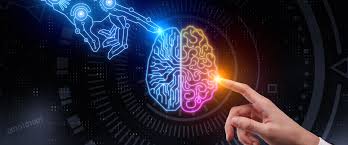
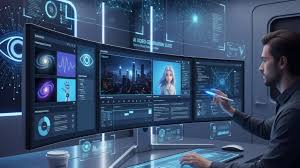
Artificial Intelligence is revolutionizing every sector of modern business—not by replacing human workers, but by amplifying their capabilities, accelerating workflows, and freeing professionals to focus on creative problem-solving and strategic thinking.Google's comprehensive collection of 1,001 real-world AI use cases from industry leadersdemonstrates the breadth and depth of AI's transformative impact across global enterprises.
In healthcare, AI assists physicians in diagnosing diseases with unprecedented accuracy, analyzing medical images in seconds while doctors focus on patient care and treatment planning. Financial institutions deploy AI to detect fraudulent transactions in real-time, protecting millions of customers while compliance teams concentrate on complex regulatory challenges. Manufacturing plants use AI-powered predictive maintenance to prevent equipment failures, enabling engineers to optimize production processes rather than responding to breakdowns.
The legal profession leverages AI to review thousands of documents in hours instead of weeks, allowing attorneys to dedicate their expertise to case strategy and client advocacy. Retailers harness AI for personalized customer recommendations and inventory optimization, empowering sales teams to build deeper customer relationships. Marketing departments utilize AI-generated content and insights to scale campaigns while marketers focus on creative direction and brand strategy.
Educational institutions implement AI tutoring systems that adapt to individual learning styles, freeing educators to mentor students and develop innovative curricula. Customer service teams deploy AI chatbots to handle routine inquiries instantly, enabling representatives to resolve complex issues requiring human empathy and judgment. Human resources departments use AI to screen resumes and schedule interviews, allowing HR professionals to focus on culture building and talent development.
Supply chain managers rely on AI forecasting to optimize logistics, procurement specialists concentrate on supplier relationships and negotiations. Software development teams use AI coding assistants to automate repetitive tasks, accelerating project timelines while developers tackle architectural challenges. Content creators employ AI tools for research and drafting, channeling their energy into storytelling and audience engagement.
In agriculture, AI-powered drones and sensors monitor crop health across vast fields, enabling farmers to make data-driven decisions about irrigation and fertilization. Architecture and design firms use AI to generate multiple design variations rapidly, allowing architects to explore creative possibilities and refine concepts. Real estate professionals leverage AI for property valuation and market analysis, focusing their time on client relationships and deal negotiation.
Research scientists utilize AI to analyze experimental data and identify patterns, accelerating discovery while researchers design experiments and interpret implications. Transportation and logistics companies optimize routes with AI algorithms, reducing costs and emissions while logistics managers focus on strategic planning. Insurance providers use AI for risk assessment and claims processing, enabling underwriters and adjusters to handle complex cases requiring nuanced judgment.
The hospitality industry deploys AI for dynamic pricing and personalized guest experiences, allowing hotel staff to focus on exceptional service delivery. Energy companies use AI to predict demand and optimize grid management, supporting engineers in developing sustainable infrastructure. Entertainment studios leverage AI for visual effects and content recommendations, while creative professionals focus on storytelling and artistic direction.
Government agencies implement AI for document processing and service delivery, enabling civil servants to concentrate on policy development and citizen engagement. Telecommunications companies use AI for network optimization and customer analytics, supporting teams in infrastructure planning and service innovation. Cybersecurity professionals employ AI threat detection systems that analyze millions of events per second, allowing security experts to focus on strategic defense planning and incident response.
The fundamental truth emerging across all sectors is that AI excels at processing vast amounts of data, identifying patterns, automating repetitive tasks, and providing insights—but human judgment, creativity, emotional intelligence, and strategic thinking remain irreplaceable. AI handles the computational heavy lifting so professionals can apply their uniquely human capabilities to higher-value work.
This symbiotic relationship between human expertise and artificial intelligence represents the future of work—not a replacement of human workers, but an amplification of human potential. Organizations that successfully integrate AI while empowering their workforce to focus on distinctly human contributions will lead their industries. The question is no longer whether to adopt AI, but how to implement it strategically to enhance human capabilities and accelerate business outcomes.
Explore Industry-Leading AI Use Cases
Discover how Fortune 500 companies and innovative startups are implementing AI across every business function. Learn from real-world examples and gain insights into successful AI adoption strategies.
View 1,001 AI Use Cases from Google